Black Music Seen
Black Music Seen is a podcast preserving the lived stories of Black classical musicians. Through thoughtful conversations, we document the artistry, lineage, and labor that have shaped — and continue to shape — classical music.
Listen on:






Episodes

Thursday Mar 26, 2026
Thursday Mar 26, 2026
J’Nai Bridges is one of the most celebrated mezzo-sopranos in the world—and behind the global stages, there’s a deeper story about identity, discipline, and what it truly means to live in alignment.
In this powerful conversation, J’Nai reflects on:
What it means to feel grounded, confident, and free in her artistry
The discipline required to sustain a world-class career in opera
The role of boundaries, preparation, and self-trust in her success
Her journey from church choir to the Metropolitan Opera
Navigating the classical music world as a Black woman
Carrying the legacy of icons like Marian Anderson and Jessye Norman
From her Met Opera debut to redefining what excellence looks like today, J’Nai shares what it means to not just perform—but to transform spaces through presence and purpose.
🎙️ You’re listening to Black Music Seen—where we archive the brilliance and legacy of Black classical musicians in real time.
Follow @BlackOrchestralNetwork for more conversations like this
Thursday Mar 12, 2026
Thursday Mar 12, 2026
In this episode of Black Music Seen, host David Norville sits down with four members of the Chicago-based chamber music collective D-Composed:
Caitlin Edwards (violin)Tahirah Whittington (cello)Khelsey Zarraga (violin)Wilfred Farquharson (viola)
Together, they share the story behind an ensemble that is reshaping what classical music can look and feel like.
Founded to center Black composers, Black musicians, and Black audiences, D-Composed has spent nearly a decade creating musical experiences that go far beyond the traditional concert hall. Their work blends chamber music with storytelling, meditation, poetry, and community-centered programming designed to invite audiences into deeper reflection and connection.
D-Composed Transcript
In this conversation, the ensemble reflects on:
• Their personal musical journeys• The origins and mission of D-Composed• Reimagining classical performance spaces• Collaborations with artists across disciplines• The power of representation in music• Creating environments where musicians and audiences can show up fully as themselves
They also discuss how D-Composed programs concerts that intentionally weave together Black composers, contemporary artists, poetry, and storytelling to create immersive experiences rooted in community and cultural expression.
D-Composed Transcript
From performing Destiny’s Child arrangements to presenting works by Florence Price and Daniel Bernard Roumain, D-Composed is demonstrating how classical instruments can carry the full spectrum of Black musical traditions.
This conversation offers a powerful look at what happens when artistry, community, and vision come together to build something new.
Thursday Feb 26, 2026
Thursday Feb 26, 2026
In this powerful episode of Black Music Seen, David Norville sits down with brothers William Henry Curry and Ralph Curry — two musicians whose lives trace the arc of Black classical history in America
From pounding on pianos in working-class Pittsburgh homes to standing on the Great Wall of China with the Cleveland Orchestra, the Curry brothers reflect on the early teachers who changed their lives, the “lightbulb moments” that revealed their calling, and the relentless work required to sustain excellence.
William shares the unforgettable story of conducting Beethoven’s Ninth at age 21 — without rehearsal — after a last-minute emergency. Ralph recounts his audition journey with the New York Philharmonic and the complicated reality of being among the first Black fellows in a major orchestra.
Together, they speak candidly about:
Growing up in a segregated America
Being told there “aren’t many of your kind” in major orchestras
Boardrooms that resisted Black leadership
The pressure to be twice as good
The difference between talent and integrity
Why doing the work still matters
They also reflect on progress — slow, often glacial — and the responsibility they now feel to support the next generation of Black classical musicians.
This is a conversation about resilience. About community. About the love of music that endures even when the system does not.
Black Music Seen continues its commitment to preserving the lived stories of Black classical musicians — honoring those who carried the culture and those shaping what comes next.
Thursday Feb 19, 2026
Thursday Feb 19, 2026
Following our conversation with Lawrence Brownlee, this episode centers on Weston Sprott and Shea Scruggs — founding members of the Black Orchestral Network — for a deeper look at how BON began and what it means to build something that lasts.
What started as informal conversations among friends evolved into a sustained effort to create community, advocacy, and infrastructure for Black orchestral musicians. Weston and Shea reflect on the early days, the urgency of 2020, and the quiet consistency required to transform reflection into action.
The conversation explores:
• The organic beginnings of BON• The responsibility of mentorship• The evolution from community gathering to formal organization• Recent initiatives including Dear American Orchestras Part III, which examines the experiences of orchestral fellows and offers recommendations for structural improvement
This episode offers a candid look at the work behind the work — the relationships, conversations, and commitment that continue to shape the Black Orchestral Network.
Black Music Seen remains committed to preserving the lived stories of Black classical musicians — honoring those who carried the culture and those building its future.
Tuesday Feb 17, 2026
Tuesday Feb 17, 2026
In this episode of Black Music Seen, tenor Lawrence Brownlee joins Weston Sprott and Shea Scruggs for an unfiltered conversation about the real work behind a lasting career in classical music.
From singing in church to performing leading roles at the Metropolitan Opera, Brownlee reflects on the long road to artistic authority — including the rejection, setbacks, and self-doubt that shaped him along the way. He speaks candidly about losing early competitions, being told he would never have a major career, and why he believes failure is not an obstacle, but a necessary ingredient of success.
Together, they explore:• The difference between confidence and arrogance• The discipline required to sustain excellence• The legacy of Black opera pioneers who paved the way• What it means to stand on the shoulders of Marian Anderson, Leontyne Price, and George Shirley• The responsibility of mentorship and carrying the culture forward
Black Music Seen continues its commitment to preserving the lived stories of Black classical musicians — honoring those who carried the culture and those shaping what comes next.
Thursday Feb 12, 2026
Thursday Feb 12, 2026
In this episode of Black Music Seen, we spotlight the next generation of leadership in Black classical music.
Hosted by Brittney Bryanna Burgess — Executive Director of Black Collegiate Musicians — this conversation features Shania Watts (violist at The Juilliard School and President of the Juilliard Black Student Union) and Wynter McCray (double bassist at Juilliard and Vice President of the Juilliard Black Student Union).
Recorded live at OPERA America, this dialogue centers on mentorship, self-advocacy, and the importance of building a life in classical music that extends beyond the practice room. From learning how to say no, to asking questions without fear, to imagining a more diverse and sustainable future for the concert hall, this episode reflects on what it means to lead with intention.
Black Collegiate Musicians works to connect and uplift Black music students nationwide, serving as a network of support, advocacy, and community.
This episode continues our commitment to preserving the lived stories of Black classical music — from those who carried the culture to those shaping what comes next.
Thursday Jun 26, 2025
Thursday Jun 26, 2025
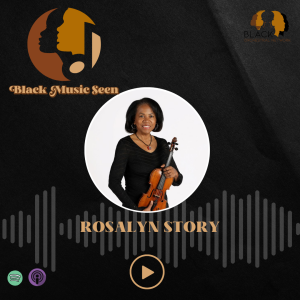
On today’s episode, we’re joined by violinist, writer, and cultural historian Rosalyn Story.
For more than 30 years, Rosalyn Story has performed violin with the Fort Worth Symphony — but her artistry doesn’t stop there. She’s also a novelist, a journalist, and a passionate keeper of Black musical history. Whether chronicling the legacy of opera trailblazers like Sissieretta Jones or guiding students through the soundscape of African American music, Rosalyn brings a rare kind of dual fluency — one grounded in both performance and storytelling.
In this episode, she shares how a $0.75 violin class in Kansas City sparked a lifelong passion, what it meant to be the only Black musician in the room, and how music — especially jazz — continues to sustain her in moments of grief and resistance.
It’s a conversation about resilience, reverence, and the many ways we remember who we are — through sound, through stories, and through one another.
Thursday May 29, 2025
Thursday May 29, 2025
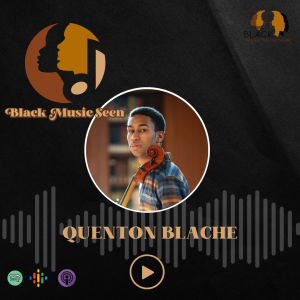
In today’s episode, we’ll meet 23-year-old Quenton Blache, a remarkable cellist and composer. Quenton has performed with prestigious groups like the National Youth Orchestra of the USA and Sphinx Virtuosi. He has also been commissioned to create works for the Sphinx Virtuosi, North Carolina Chamber Music Institute, and Little Orchestra Society.
Quenton is particularly passionate about composing for visual media and has scored numerous short films and documentaries. Today, he joins us to discuss his latest project, "To Whom I Pray," an audiovisual piece.
We'll explore Quenton's journey, listen to some of his works, and, at the end of the show, premiere his brand-new piece.
Thursday May 22, 2025
Thursday May 22, 2025
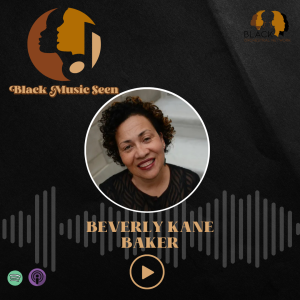
On today’s episode, we’re talking with Beverly Kane Baker—a pioneering violist whose career has spanned decades, stages, and generations. From her early training at Juilliard to her role as principal violist with the Virginia Symphony Orchestra, Beverly has carved out a legacy grounded in excellence, community, and spiritual purpose.
In our conversation, she reflects on growing up in a music-filled neighborhood, the mentors who shaped her, and the values of discipline, service, and joy that continue to guide her life. We also talk about what it means to show up—fully and authentically—as a Black woman in classical music spaces, and how she continues to inspire the next generation.
Monday Apr 21, 2025
Monday Apr 21, 2025
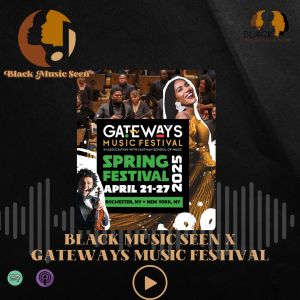
On today’s episode, We’re highlighting the Gateways Music Festival — a powerful meeting ground for Black classical musicians from across the country. It’s more than a festival. It’s a home. A reunion. A proving ground.
You’ll hear from four extraordinary artists who carry that legacy forward: Alex Laing, Curtis Stewart, Melissa White, and Damien Sneed.
From world premieres to reimagined classics, from personal reflections to artistic breakthroughs — this episode is a window into the soul of Gateways.